Car battery guide · 9 min read
What to Do Before and After a Car Jump Start
A jump start can restore enough power to crank an engine, but it does not repair a worn battery or diagnose the charging system. Safe preparation and sensible follow-up reduce the chance of injury, vehicle damage, or another immediate no-start.
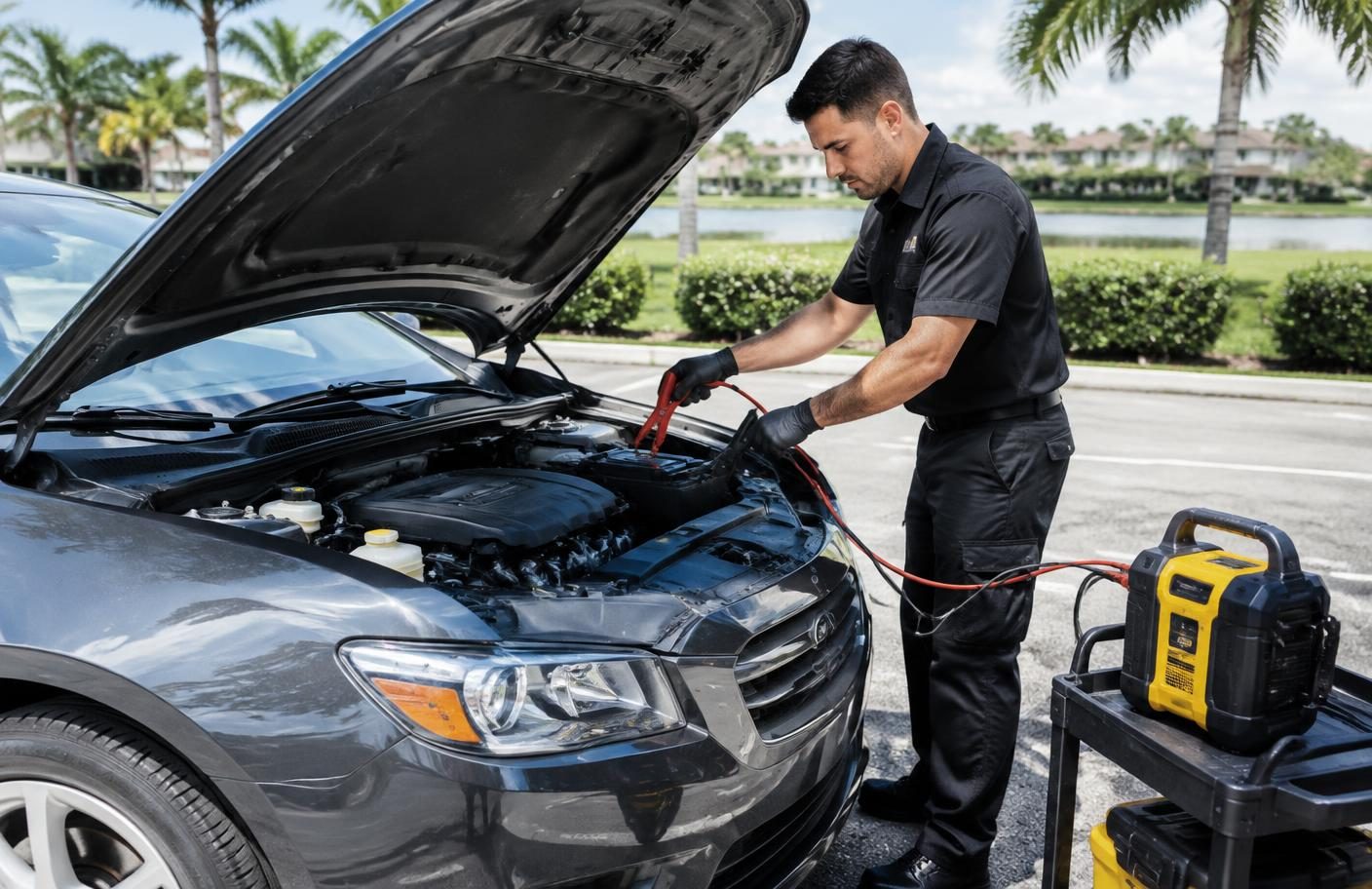
Safety checks before connecting anything
Move people away from traffic and confirm the vehicle is legally and safely positioned. Read the vehicle owner's manual because connection points and procedures vary. Some vehicles provide remote jump terminals because the battery is not under the hood.
Do not proceed if the battery is swollen, cracked, leaking, frozen, smoking, giving off a strong odor, or unusually hot. Keep sparks, cigarettes, and open flames away from the battery area.
- Confirm both systems use the correct voltage
- Switch off lights and accessories
- Keep vehicles from touching when using another vehicle
- Use designated connection and ground points
- Keep cables clear of fans, belts, and moving parts
Why connection order matters
Manufacturer instructions commonly place the final negative connection on a designated ground point away from the discharged battery. This helps keep any connection spark farther from gases that may be present near the battery. The exact sequence and locations should come from the owner's manual for the vehicles and equipment involved.
Professional jump equipment avoids positioning a second vehicle and can provide protection features, but it still must be used correctly and only on a battery that appears safe.
What a successful jump proves—and what it does not
A successful jump proves that added electrical power helped the starter turn the engine. It does not prove the battery will accept or hold a charge. It also does not prove the alternator, cables, and connections are working correctly.
After the engine starts, observe warning lights and unusual electrical behavior. A battery and charging-system check can clarify whether the battery was simply discharged, has lost capacity, or is not being recharged properly.
What to do if the vehicle will not start
Stop repeated attempts if cables become hot, there is smoke or odor, or the starter does not turn normally. A no-start with adequate external power may involve the starter, security system, fuel delivery, ignition, wiring, or another fault.
Describe exactly what happened before and during the attempt. A mobile battery visit can address many battery-related problems, but it should not become a substitute for mechanical or electrical diagnosis when the evidence points elsewhere.