Car battery guide · 9 min read
Dead Battery vs. Alternator vs. Starter: What the Symptoms Mean
Battery, alternator, and starter problems overlap because all three affect the starting process. A symptom checklist can help you describe the problem, but testing is what separates a reasonable guess from a sound recommendation.
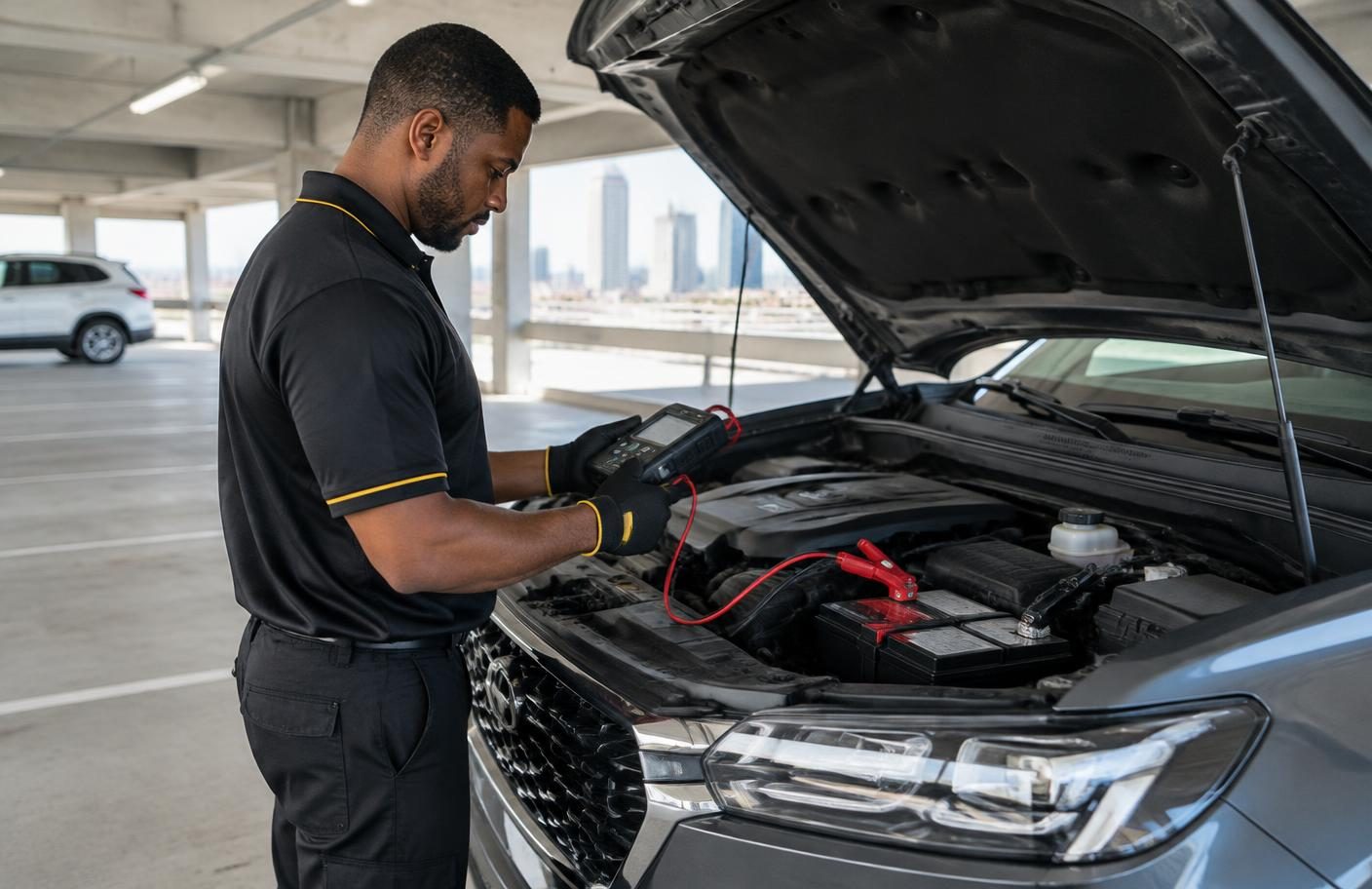
What the battery does
The 12-volt battery supplies the high current needed to operate the starter and supports electrical systems when the engine is off. As a battery ages or becomes discharged, it may still power small lights while failing under the much heavier starter load.
- Slow cranking that worsens over several starts
- Rapid clicking and strong light dimming
- A successful jump followed by normal operation
- Visible battery damage or recurring discharge
What the alternator does
Once the engine is running, the charging system replenishes the battery and supports the vehicle's electrical demand. A new battery can become discharged if the charging system is not supplying appropriate voltage.
A battery or charging warning light, electrical behavior that changes while driving, or a vehicle that stops again soon after a jump can justify charging-system checks. The warning light does not always mean the battery itself needs replacement.
- Charging warning light while the engine runs
- Lights or accessories that fluctuate with engine speed
- A battery that repeatedly becomes discharged despite recent replacement
- The engine stops after external power is removed or shortly after driving
What the starter does
The starter turns the engine so combustion can begin. A starter fault may produce a single click, intermittent no-crank, or no response even when the battery tests well. Cable, relay, ignition, and security-system issues can look similar.
Mobile battery testing can help rule the battery and visible connections in or out. Deeper starter-circuit diagnosis or repair may require a shop or automotive electrical specialist.
A practical diagnostic order
Start with the safest, least invasive checks: observe warning lights and sounds, inspect for obvious battery damage, confirm visible terminal security, and test battery state and performance. If the engine starts, check charging behavior. If the battery and charging system appear serviceable, the diagnosis should move beyond battery replacement.
Replacing a battery without testing may leave the original problem unresolved. The goal is not simply to make the engine start once; it is to identify the most likely cause and choose the right next step.