Car battery guide · 8 min read
How to Tell If Your Car Battery Is Dead
A car that will not start does not automatically need a new battery. The sound it makes, the behavior of the lights, and what happened before the failure can narrow the possibilities. This guide explains what you can observe safely and why a proper battery test matters before parts are replaced.
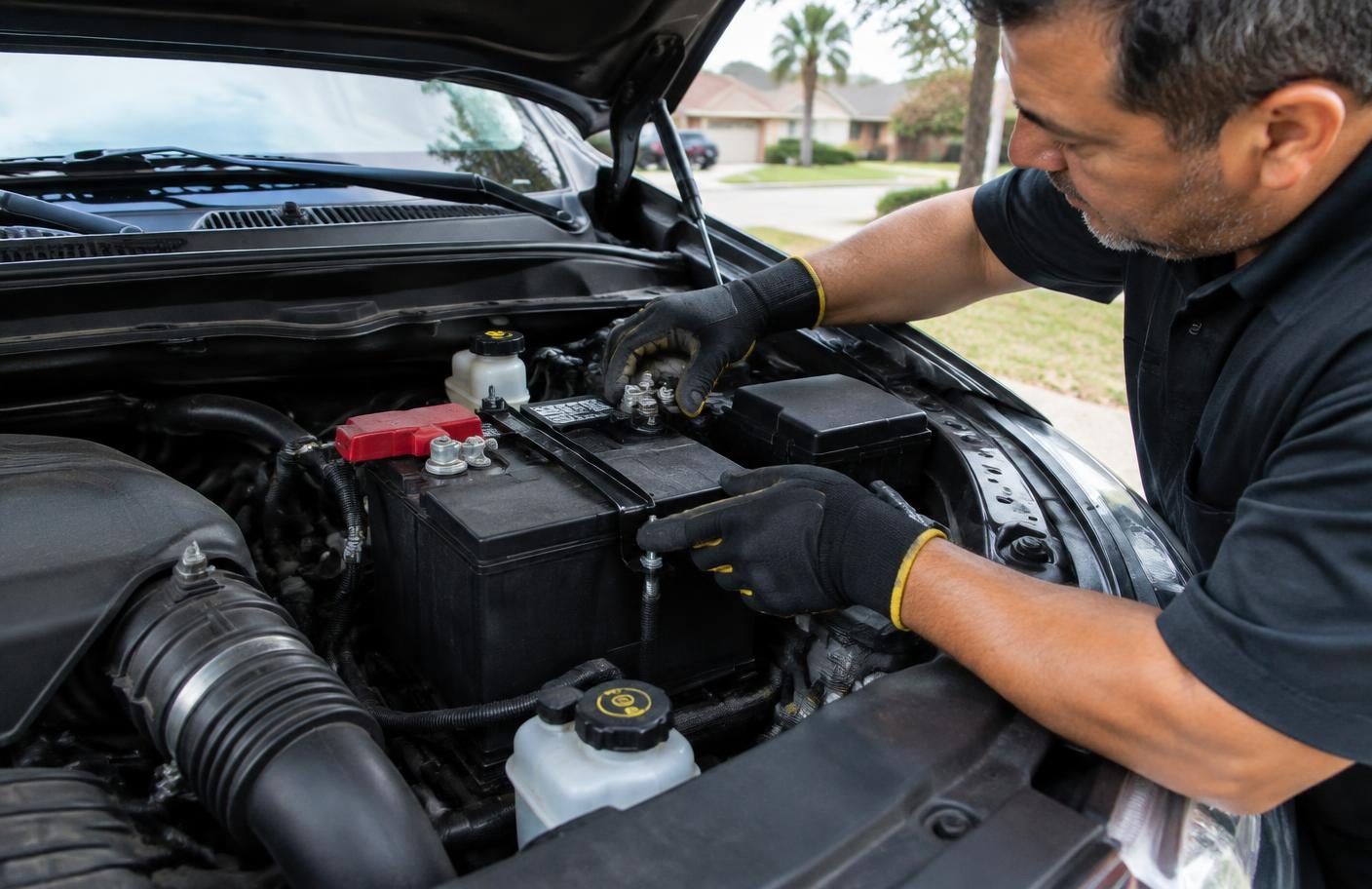
Common signs of a weak or dead battery
A weak battery often loses cranking power gradually. The engine may turn more slowly than usual, interior lights may dim during a start attempt, or the vehicle may need more than one jump within a short period. A fully discharged battery may produce rapid clicking or no useful cranking at all.
These signs point toward a battery or connection problem, but none proves the battery itself has failed. Loose or corroded terminals can limit current, and starter or charging-system faults can create similar symptoms.
- Slow, uneven, or labored engine cranking
- Rapid clicking when the key is turned or start button is pressed
- Lights that dim sharply during the start attempt
- Electrical accessories that work but the engine does not crank
- A recent need for repeated jump starts
What the lights and sounds can tell you
Bright dashboard lights with one heavy click can point toward a starter or connection problem. Rapid clicking commonly occurs when voltage drops under load. No lights at all may mean a deeply discharged battery, a disconnected terminal, a main fuse issue, or another interruption in the electrical supply.
Listen without repeatedly attempting to start the engine. Repeated cranking can add heat to cables and components without solving the underlying fault.
- Rapid clicks: voltage may be collapsing under starter load
- One solid click: the starter circuit may need further diagnosis
- Normal cranking without starting: fuel, ignition, security, or another system may be involved
- No electrical response: check for a safe, visible connection issue before assuming the battery is bad
Why voltage alone does not settle the question
A resting-voltage reading is useful, but it is only one part of a battery assessment. A battery can show reasonable voltage without delivering the current needed by the starter. Testing under load helps reveal whether voltage falls excessively when demand rises.
A useful on-site check considers resting voltage, cranking behavior, battery age and condition, visible connections, and charging voltage after the engine starts. The result should guide the recommendation rather than the other way around.
When to stop and request help
Do not touch, charge, or jump a battery that is cracked, leaking, swollen, smoking, frozen, or unusually hot. Keep sparks and flames away from the battery area. If the vehicle is stopped in traffic or another unsafe location, personal safety and roadside clearance come before diagnosis.
For a safely parked vehicle, send the exact location, vehicle year, make, model, and what happens during a start attempt. Those details help determine whether battery testing, a jump start, or another kind of assistance makes sense.