Car battery guide · 10 min read
How Mobile Car Battery Replacement Works
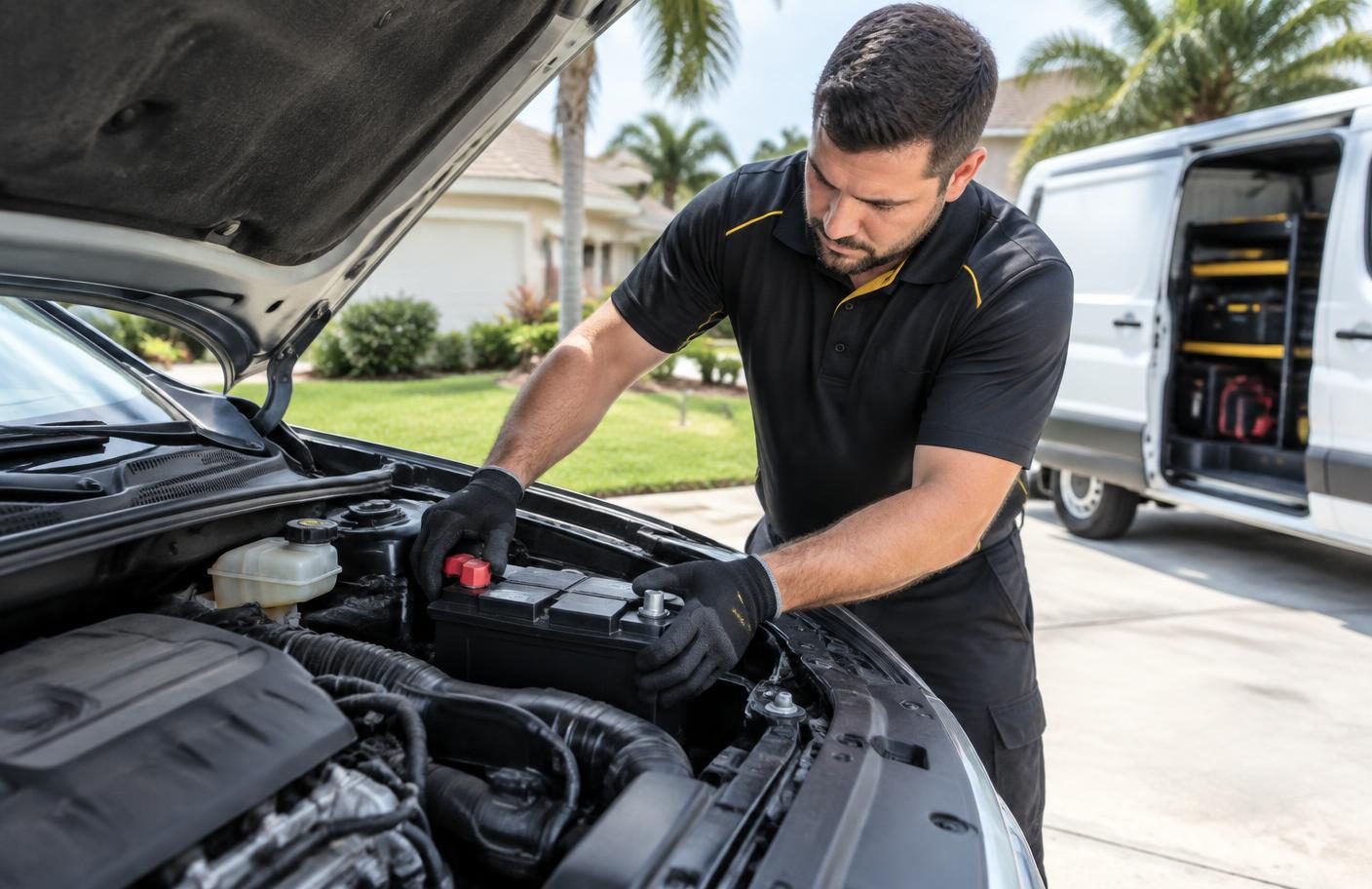
Mobile battery replacement brings the battery, tools, and basic testing to the parked vehicle. A good visit starts before installation: the vehicle and symptoms are confirmed, the existing battery and connections are assessed, and replacement proceeds only when it is an appropriate next step.
Before the technician arrives
The most useful request includes the exact location, vehicle year, make, model, engine or trim, and a description of the starting problem. A vehicle identification number may help where multiple battery specifications were offered.
For apartments, garages, campuses, airports, or gated properties, provide the level, space, clearance, entry instructions, and a reliable way to reach the vehicle. The work area must be safe and accessible.
- Keep the keys available
- Turn off lights and accessories when possible
- Do not handle a damaged or hot battery
- Share recent jump starts, warning lights, or electrical work
- Mention if the battery is under a seat, in the trunk, or otherwise difficult to reach
How the correct battery is identified
Physical size is only part of battery fit. Terminal position, hold-down design, cold-cranking capacity, reserve capacity, and battery technology may all be specified for the vehicle. Start-stop vehicles and some luxury or European models may require an AGM battery and a battery-management reset or registration procedure.
Using an incorrect specification can lead to fit problems, poor performance, or conflicts with vehicle systems. The vehicle manufacturer's requirements should take priority over visual similarity.
The installation and checks
The technician checks the existing battery and visible connections, safely disconnects and removes the old battery, installs and secures the compatible replacement, and reconnects the terminals. Basic terminal cleaning may be appropriate when corrosion is limited and the components remain serviceable.
After installation, the vehicle is started and charging voltage is checked when the vehicle permits. Warning lights, unusual starting behavior, or abnormal charging results should be explained before the visit is considered complete.
- Confirm vehicle and battery specification
- Inspect case, terminals, cables, and hold-down
- Protect vehicle electronics and follow connection procedures
- Secure the battery against movement
- Verify starting and charging behavior
When mobile replacement is not the whole answer
A new battery cannot repair a failing alternator, starter, damaged cable, parasitic electrical draw, immobilizer fault, or mechanical problem. If testing does not support replacement, the responsible recommendation may be further diagnosis instead.
Hybrid and electric vehicles often include a conventional 12-volt battery, but their high-voltage systems require specialized training and procedures. Mobile 12-volt service should never be presented as high-voltage battery repair.